
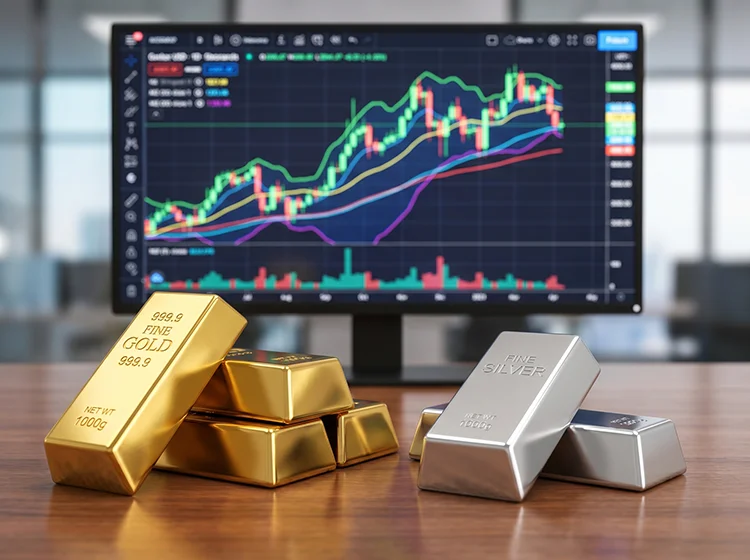
Precious metals markets have experienced renewed momentum as investors continue monitoring inflation trends, central bank policy decisions, and broader economic uncertainty. Gold and silver prices have remained in focus as traders evaluate the potential impact of persistent inflationary pressure and shifting interest-rate expectations.
Gold traditionally attracts attention during periods of economic instability, particularly when investors seek assets perceived as stores of value. Recent market activity has reflected increased interest in safe-haven investments as global markets respond to ongoing geopolitical tensions, changing monetary policy, and concerns surrounding long-term economic growth.
Silver has also seen increased activity, supported not only by investor demand but also by its industrial applications in sectors such as renewable energy, electronics, and manufacturing. This combination of industrial and investment demand can often lead to heightened volatility in silver markets compared to gold.
Traders are closely watching statements from major central banks, including the Federal Reserve and the European Central Bank, for signals regarding future interest-rate policy. Higher interest rates can strengthen the U.S. dollar and influence metals pricing, while expectations of slower rate hikes or future cuts may provide support for precious metals markets.
Market participants are also monitoring global bond yields, currency fluctuations, and commodity-sector performance for additional direction. As uncertainty remains elevated across financial markets, gold and silver continue to play an important role within diversified trading strategies.
Volatility within metals markets may continue as new inflation data, employment reports, and geopolitical developments emerge throughout the year. Many active traders remain focused on technical resistance levels, trading volume, and broader macroeconomic indicators to identify potential opportunities across precious metals markets.